Why We Built Admin Reindex and Released It as Open Source

A routine Magento maintenance task still depended too heavily on terminal access and developer availability. We built a safer path for authorised store teams, then opened the finished extension so the wider Magento community could inspect it, use it, and improve it.
Technical stack
- Magento 2
- Store operations
- Open source
- MIT license
Why this extension needed to exist
Magento uses indexes to keep product, category, pricing, stock, and search information ready for the storefront. When an index needs attention, the Admin can show the problem, but the person looking at that screen may still need a developer with terminal access to start the work.
We kept seeing the same gap between visibility and action. Store teams could understand that something needed to be refreshed, yet a routine recovery step remained outside the place where they already managed the store. Admin Reindex began as a focused answer to that everyday operational problem.
A familiar task should stay in a familiar place
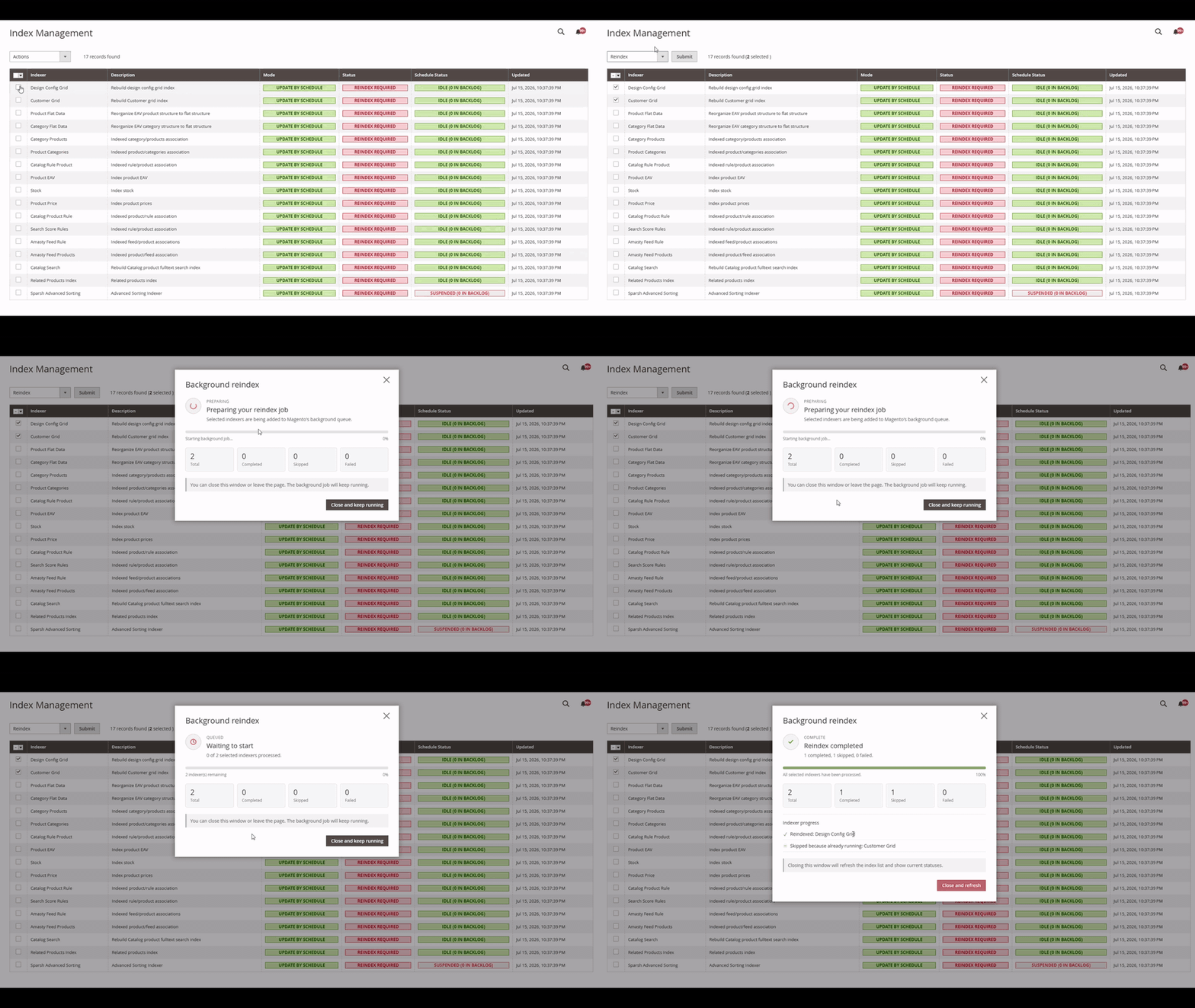
We did not want to create another dashboard that staff would have to learn and remember. The extension adds the action to Magento’s existing Index Management screen, where the status of each index is already visible. An authorised user can choose the affected rows, start the job, and continue with other work while Magento handles the longer process in the background.
That simple experience was the main product decision. The extension should feel like a missing part of Magento rather than a separate tool placed beside it.
Alternatives considered before custom development
The first option was to leave reindexing as a command-line-only operation and improve internal runbooks. That kept the platform unchanged but did not remove the routine dependency on developer access. A second option was a separate Admin dashboard. It would duplicate the index list, status language, permissions, and navigation Magento already provides. A synchronous controller action was smaller to code but would couple long indexer work to an HTTP request and PHP limits.
The chosen design adds only the missing actions and progress behavior to native Index Management. It preserves the familiar screen, uses a dedicated ACL, schedules work through Magento background primitives, and lets native indexer APIs remain the authority.
Making a powerful action feel safe
Adding a button is easy. Making that button predictable around real store activity is the important part. The extension respects Magento’s administrator permissions, avoids starting the same work twice, and keeps longer jobs away from the page request so the screen does not have to remain open.
Progress belongs to the administrator who started the work. If one item cannot complete, the remaining scheduled items can continue, while the useful summary stays in the Admin and the deeper error information remains available to the developer in Magento’s logs.
Architecture and Magento components affected
The module adds Admin actions and progress UI to Index Management, a dedicated ACL resource, request validation, a scheduler protected by LockManager, Magento Bulk Operations records, Message Queue topics and consumers, worker-health evaluation, operation ownership checks, and native Reindex or Reset calls. It relies on Magento cron or a documented process-managed consumer path rather than starting system processes from PHP.
No custom database table, frontend storefront code, alternate indexer state, PHP-limit change, cache mutation, or separate process supervisor is introduced. That boundary is important because uninstalling the presentation and scheduling layer should not leave a competing indexing system behind.
- System > Tools > Index Management actions and progress presentation.
- Dedicated Admin ACL and operation ownership.
- Bulk Operations, Message Queue and consumer configuration.
- LockManager-based duplicate scheduling protection.
- Cron and consumer-lock signals for worker-health warnings.
- Native indexer reindexAll and invalidate operations.
Why we released it as open source
Once the extension was working, keeping it private would have limited the value of solving a problem shared by many Magento stores. We released Admin Reindex under the MIT license so merchants and developers can read the code before trusting it, understand how it fits into Magento, report issues, and contribute improvements.
Open sourcing also raised the standard of the release. A useful internal tool had to become a product with clear installation steps, compatibility information, documentation, version history, and a public place for support and discussion.
What the public release includes
Version 1.0.0 is free to install through Composer and is available on GitHub and Packagist. The public package includes the source code, documentation, compatibility notes, changelog, and issue tracker. It supports the documented Magento 2.4.4 through 2.4.9 range and uses Magento’s own background-processing setup rather than introducing a separate service.
For a store team, that means the feature can be reviewed like any other open-source dependency. For a developer, it means the operating requirements and failure behaviour are visible before the module reaches production.
Testing and release strategy
Unit tests cover focused service behavior, while CI installs supported Magento release lines against their documented PHP versions. Manual verification covers ACL, selecting one or many indexers, Reindex and Reset, a stopped consumer, queued recovery, duplicate requests, a mixed selection containing existing work, one failing indexer, progress ownership, closing the page, and installation through Composer.
The release process updates the public changelog, compatibility matrix, Composer metadata and documentation together. Store installation requires module enablement, setup:upgrade, DI compilation and cache cleaning; production mode also needs the normal static-content deployment because the progress interface includes Admin JavaScript and CSS.
Verified public outcome and the lesson behind the build
The verified outcome is the public artifact itself: a source repository, MIT license, Packagist package, documentation, versioned changelog, compatibility matrix, CI configuration, and issue tracker that another Magento team can inspect. The case study does not infer adoption, revenue, time saved, uptime, or performance from that release.
Good extensions often begin with a small repeated frustration, not a long feature list. Admin Reindex stays focused on one missing operational step, follows the screen and permissions teams already use, and leaves Magento responsible for the work it already knows how to do. Publishing the solution raised the documentation and compatibility standard and created a reviewable baseline for future releases.
Talk to us
Is a routine Magento task still waiting on developer access?
Share the screen, the repeated task, and what your store team needs to control safely. We can help define a focused extension or workflow improvement.

 HaroonFounder & Magento Engineer
6 min read